A Balanced Team is more than filling roles
Balanced Team vs Cross-functional Team: What’s the difference?
by
HEEWON CHOI
A Balanced Team is more than filling roles
Balanced Team vs Cross-functional Team: What’s the difference?
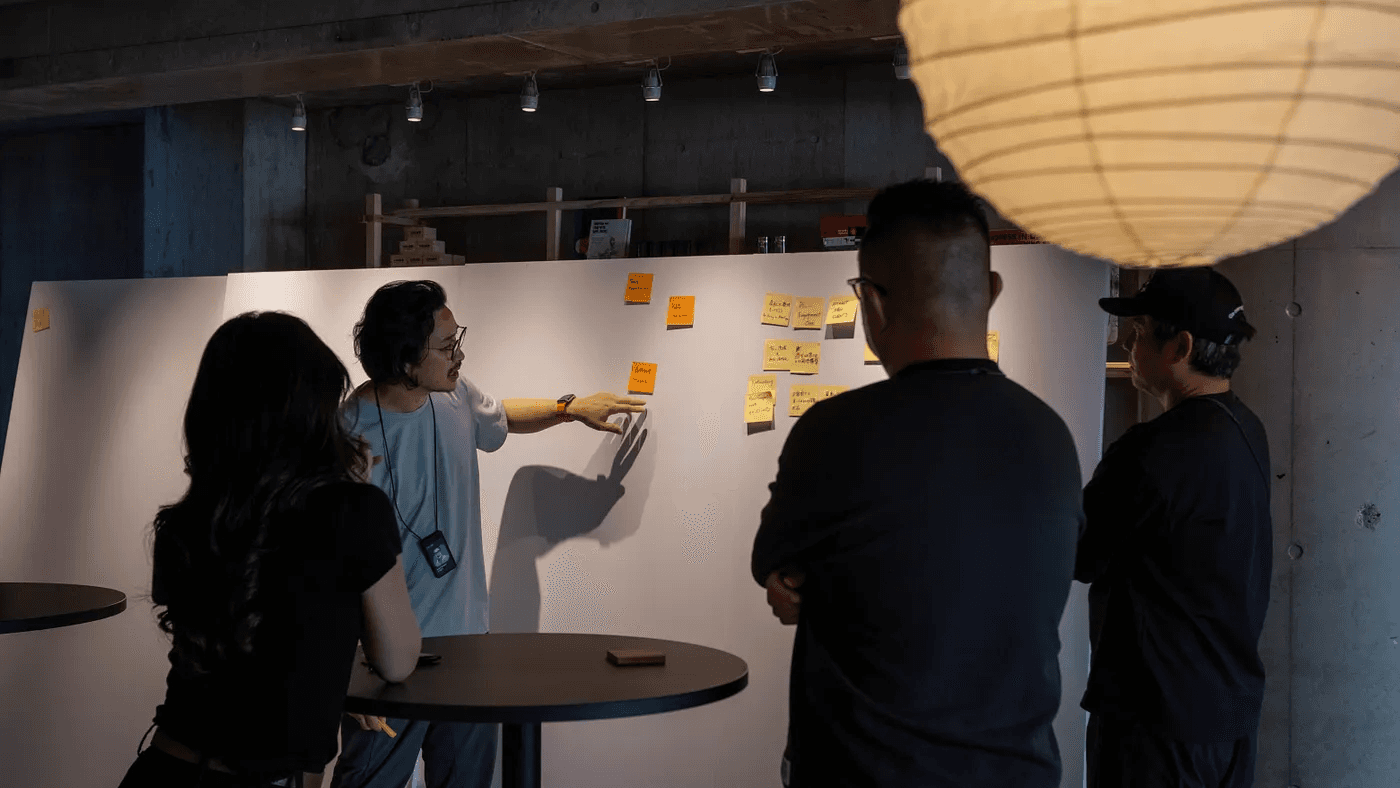
Have you ever experienced a moment like this in your team? Someone takes on a task they are not yet familiar with, and you wonder: Should I watch, or should I step in and help carry the load?
In these small moments, the true nature of a team is revealed. From the outside, it may look like multiple roles are working together. Still, inside, the real question is whether each craft is being respected — or whether it’s just a group of divided responsibilities.
Many organizations claim, “We work as a Balanced Team.” But when you look closely, what you often see is just a cross-functional team with multiple roles assembled.
The first condition of a Balanced Team is craft
The first thing we must acknowledge when discussing a Balanced Team is CRAFT.
Design, engineering, and product management.
These three crafts are indispensable in building products.
💡 Note — What does “craft” mean here?
According to the Oxford Dictionary, craft means:1. skill in making things by hand
2. skill in persuading people
3. a job or activity that requires special skill and trainingIn this essay, “craft” refers to the third definition: a discipline that must be respected within the team. For example, design craft, engineering craft, and product management craft are irreplaceable expertise in product development.
📌 Addition: This essay uses the common form of a Balanced Team (PM, designer, engineer) as the central example. But Balanced Teams are not limited to this trio. For example, marketing and sales, or data scientists and researchers can also form Balanced Teams when balance and respect are in place.
Our mentor and long-time friend, Janice Fraser, once defined Balanced Team as
“not a methodology, but a frame of mind about how the team should interact.”
I interpret this to mean that the essence of a Balanced Team is not structure but a cultural foundation
If you want to explore further, I recommend Janice's slides →
Slideshare: Balanced Teams - Product Management, Engineering, UX Design
If even one craft is missing, the product loses balance. Push only the technology, and you’ll get something unusable. Push only design, and you’ll get beautiful but unrealistic visions. Push only business, and you’ll get a feature-stuffed product that users abandon.
That’s why Balanced Teams are more than “filling roles.” A Balanced Team requires the presence of essential crafts.
Role vs Craft — Names and Essence
Roles change depending on the situation. Today, you might facilitate; tomorrow, you might take notes.
But craft is different. It is the enduring expertise that deserves respect.
A Balanced Team is not about filling seats with roles, but about honoring craft. That’s why just “having someone in a role” doesn’t make a team balanced.
“Do we have to respect someone with no skills?”
This is where many teams hesitate. Balanced Team does not mean “respect anyone regardless of ability.” The key is to distinguish between the absence of craft and the immaturity of craft.
Absence: when the expertise doesn’t exist in the team.
e.g., no designer at all → not a Balanced Team.Immaturity: when the expertise exists but isn’t yet mature.
e.g., a new designer who doesn’t know how to design user research.
A Balanced Team doesn’t ignore absent crafts. But it respects immature crafts and grows them together.
Imperfection in crafts and the paradox
Imagine a new designer who doesn’t yet know how to design a user research plan. In a Balanced Team, the PM may step in or work together,
not to bypass the designer, but to create an opportunity for them to learn.
On the surface, it may look like the craft isn’t fully present. However, if the team respects that position and nurtures it, it remains a Balanced Team. This is the paradoxical strength of Balanced Teams: even incomplete crafts can grow under respect, making the team stronger.
A balanced team is not a state, but a principle.
A Balanced Team is not a perfect state that only happens with flawless experts. It is a principle: essential crafts must be present, and the team as a whole must share responsibility for their growth.
Cross-functional teams merely distribute roles. Balanced Teams are founded on a culture of mutual respect and growth across crafts.
Conclusion
A Balanced Team is both a structure for balance and a field for crafts to be honed and matured. What matters is not perfection, but a culture of respect and learning. Without that culture, no number of roles will ever make a Balanced Team.